
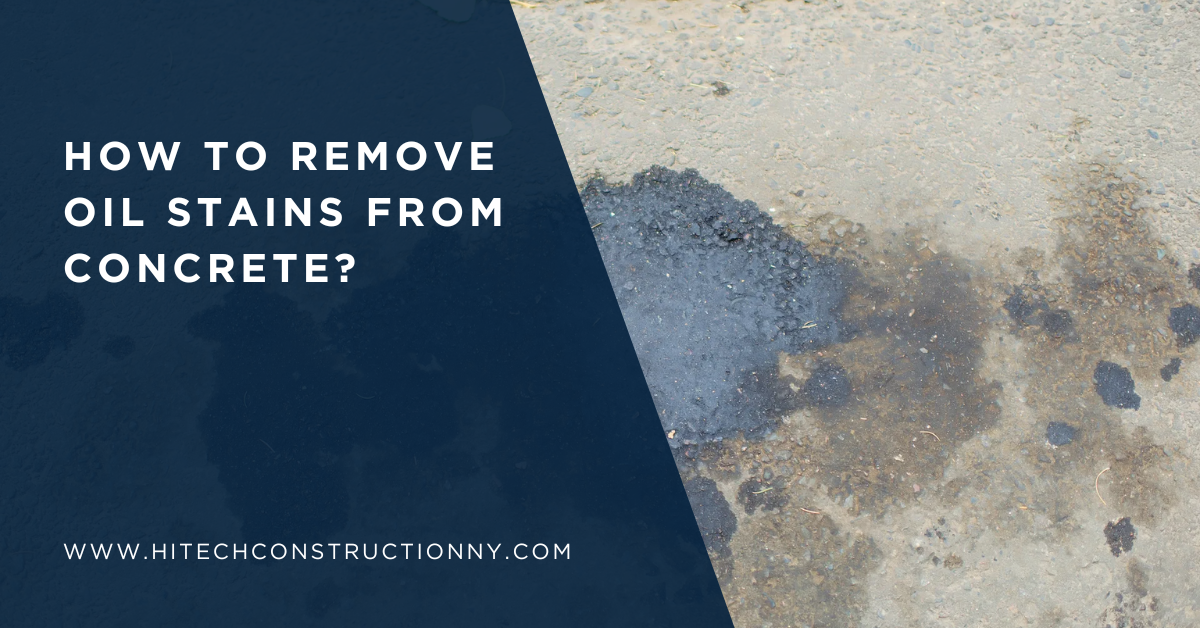
Have you noticed dark, greasy oil stains ruining the look of your concrete driveway, sidewalk, or garage floor? Oil spills soak quickly into concrete’s porous surface, making them stubborn and difficult to remove if not treated properly.
Whether the stain is fresh or has been sitting for months, using the right cleaning method can restore your concrete’s appearance and prevent long-term damage.
In this guide, you’ll learn practical, proven ways to remove oil stains from concrete using both household solutions and professional techniques.
Why Oil Stains Are Hard to Remove from Concrete?
Concrete may appear solid and non-absorbent, but its surface is filled with tiny pores and air pockets that easily absorb liquids. When oil comes into contact with concrete, it doesn’t just sit on top it quickly seeps into these pores, making the stain difficult to lift with simple rinsing or scrubbing.
As oil penetrates below the surface, it spreads outward and downward, bonding with the concrete structure itself. Over time, dirt and dust mix with the oil, causing the stain to darken and become even more noticeable. This deep absorption is why oil stains often reappear even after surface cleaning if the oil is not fully removed from within the pores.
Fresh oil spills are much easier to clean because the oil has not yet settled deep into the concrete. Quick action allows absorbent materials and mild cleaners to pull the oil back out. Older stains, however, have had time to cure and harden, requiring stronger degreasers, repeated treatments, or professional cleaning methods to fully restore the concrete’s appearance.
What You’ll Need Before Cleaning Oil Stains from Concrete
Before you begin removing oil stains, it’s important to prepare properly so the cleaning process is effective and safe. Having the right materials on hand helps you work efficiently and prevents the stain from spreading further into the concrete. Start with absorbent materials such as cat litter, baking soda, or sawdust to soak up excess oil sitting on the surface. These materials are especially useful for fresh spills and help reduce how deeply the oil penetrates.
You will also need a strong scrub brush with stiff bristles to work cleaning solutions into the concrete’s pores. A quality concrete degreaser or grease-cutting dish soap is essential for breaking down oil particles, while warm water helps activate the cleaner and rinse away residue. Wearing gloves is recommended to protect your hands from chemicals and grime. By preparing these tools in advance, you set yourself up for a smoother, more effective oil stain removal process with better long-term results.
Also Read: How Much Does It Cost To Repair a Sidewalk in NYC?
How to Remove Fresh Oil Stains from Concrete?
Fresh oil stains are much easier to remove if you act quickly. The first step is to absorb as much oil as possible before it penetrates deeper into the concrete. Sprinkle an absorbent material such as cat litter, baking soda, or cornstarch directly over the spill and let it sit for several hours. This helps pull excess oil out of the surface pores.
Once the oil has been absorbed, sweep away the material and apply a grease-cutting dish soap or concrete degreaser to the stained area. Scrub the surface firmly with a stiff brush, working the cleaner into the concrete. Rinse thoroughly with warm water and repeat the process if needed until the stain fades. Acting fast can prevent permanent discoloration and keep your concrete looking clean.
How to Remove Old or Set-In Oil Stains from Concrete?
Old oil stains require more effort because the oil has already soaked deep into the concrete. Start by cleaning the surface with water to remove loose dirt, then apply a commercial concrete degreaser or a heavy-duty cleaner designed to break down oil. Allow the product to sit for the recommended time so it can penetrate the pores and loosen the stain.
After the cleaner has settled, scrub the area vigorously with a stiff brush and rinse thoroughly. For stubborn stains, you may need to repeat the process or use a poultice made from baking soda and water to draw the oil back out of the concrete. While older stains may not disappear completely, consistent treatment can significantly lighten them and improve the overall appearance of the surface.
Pressure Washing Oil Stains from Concrete
Pressure washing can help remove surface-level oil residue and improve the overall appearance of stained concrete. It works best after applying a degreaser, as the high-pressure water can flush loosened oil out of the concrete pores. Using hot water with the pressure washer can further enhance results by breaking down grease more effectively.
However, pressure washing alone is often not enough for deep or older oil stains. Without a proper cleaning agent, the pressure may only spread the stain or force oil deeper into the concrete. For best results, combine pressure washing with degreasers and controlled scrubbing to avoid surface damage while achieving a cleaner finish.
Preventing Future Oil Stains on Concrete
Preventing oil stains is easier than removing them after they appear. Applying a quality concrete sealer creates a protective barrier that reduces absorption and makes future spills easier to clean. Sealed concrete allows oil to sit on the surface longer, giving you time to wipe it away before it causes staining.
Regular maintenance also plays an important role. Cleaning concrete surfaces periodically and addressing small spills immediately can prevent oil from building up over time. Using drip trays under vehicles or equipment and checking for leaks can further protect driveways, sidewalks, and garage floors from recurring oil stains.
When Oil Stains Indicate Larger Concrete Issues
In some cases, oil stains are more than just a cosmetic problem. If stains are accompanied by cracks, crumbling edges, or uneven surfaces, they may signal underlying concrete damage. Oil can weaken concrete over time by trapping moisture and accelerating surface deterioration, especially in high-traffic areas like sidewalks and driveways.
When staining is widespread or the concrete shows visible wear, professional evaluation becomes important. Timely sidewalk repair NYC services can address both the structural issues and surface damage, helping restore safety, appearance, and long-term durability before the problem becomes more costly to fix.
Also Read: Do Corner Properties in NYC Need Two Sidewalk Repair Permits?
Should You Hire a Professional Concrete Contractor?
While many oil stains can be treated with DIY methods, some situations require professional expertise. Deep, long-standing stains or oil-soaked concrete combined with surface damage often need advanced cleaning, resurfacing, or repair techniques that go beyond household solutions.
Working with an experienced sidewalk repair contractor NYC ensures the concrete is properly assessed and treated without causing further damage. For larger projects or ongoing concrete issues, a trusted concrete contractor New York can recommend long-term solutions such as sealing, resurfacing, or replacement to protect your concrete and restore its appearance.
Frequently Asked Questions
Can oil stains permanently damage concrete?
Oil stains usually affect the appearance of concrete rather than its structural strength. However, if oil is left untreated for a long time, it can trap moisture and dirt, leading to surface weakening, discoloration, and faster wear in high-traffic areas.
How long does it take to remove oil stains?
The time required depends on how old and deep the stain is. Fresh oil spills can often be removed within a few hours, while older, set-in stains may take several treatments over a few days to noticeably lighten or remove.
Are chemical degreasers safe for residential use?
Yes, most concrete degreasers are safe for home use when applied according to the manufacturer’s instructions. Wearing gloves, ensuring proper ventilation, and rinsing thoroughly will help achieve effective results while keeping the process safe.
Conclusion
Removing oil stains from concrete is achievable with the right approach and timely action. Fresh spills can often be cleaned quickly using absorbent materials and basic cleaners, while older stains may require stronger degreasers and repeated treatment. Understanding how oil interacts with concrete helps you choose the most effective method without causing surface damage.
By maintaining your concrete, sealing it properly, and addressing spills early, you can keep driveways, sidewalks, and garage floors looking clean and well-maintained. Consistent care not only improves appearance but also extends the lifespan of your concrete surfaces.