
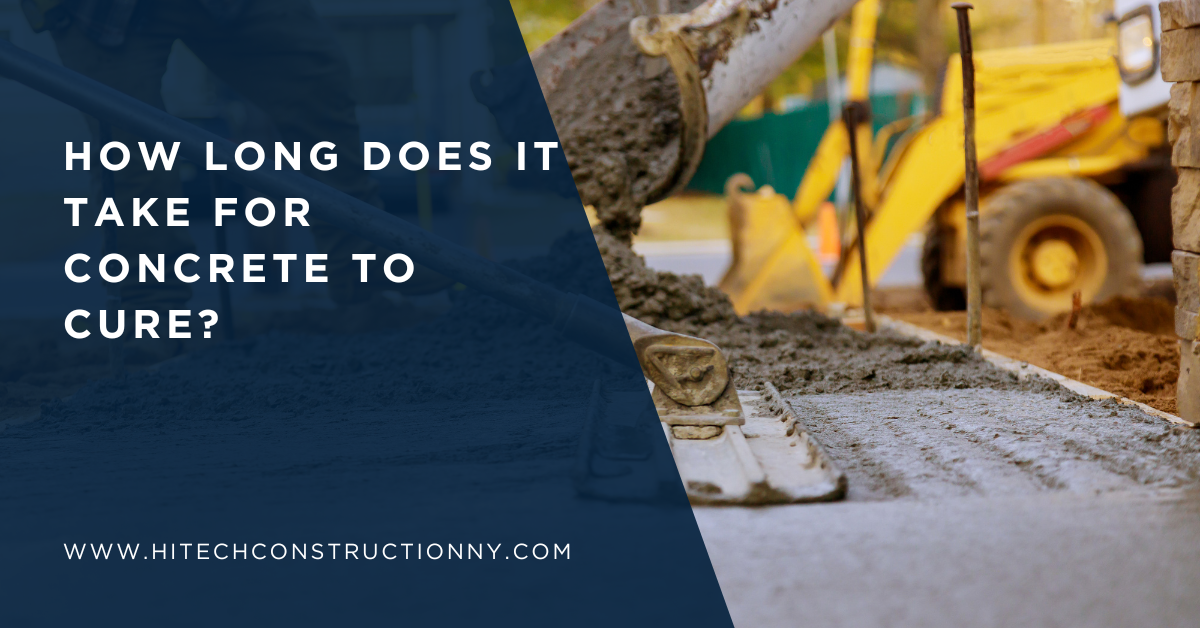
Concrete is one of the most widely used building materials worldwide, but one of the most common questions among homeowners, contractors, and builders is: how long does concrete take to cure? Understanding concrete curing time is essential to ensure strong, durable, and long-lasting results for any project.
Whether you are pouring a driveway, patio, or commercial slab, proper curing prevents cracking, surface damage, and weak spots. Professional services like concrete contractors in New York or specialized residential and commercial concrete contractors follow strict curing guidelines to ensure maximum strength and longevity.
In this comprehensive guide, we’ll explore how curing time varies with slab thickness, environmental conditions, and surface use. You’ll also learn expert tips, precautions, and answers to frequently asked questions.
What Is Concrete Curing?
Concrete curing is the process of maintaining adequate moisture, temperature, and time after placing concrete so it can achieve its desired strength.
- Proper curing allows the chemical reaction (hydration) to complete.
- Neglecting curing can cause premature cracking, surface dusting, and reduced durability.
- Most professionals recommend curing concrete for at least 7 days for standard residential slabs and longer for larger commercial projects.
Think of curing as concrete’s growth period – similar to how a plant needs water and sunlight to mature.
Factors Affecting Concrete Curing Time
Concrete doesn’t cure at a fixed rate. Multiple factors influence curing:
- Slab Thickness
- Thicker slabs take longer to cure. We’ll break down 2-inch, 4-inch, and 6-inch slabs in detail below.
- Temperature and Humidity
- Hot, dry conditions can accelerate surface drying but may reduce internal hydration.
- Cold temperatures slow down curing.
- Mix Design
- Water-to-cement ratio, additives, and aggregate size affect curing.
- Exposure to Rain or Moisture
- Rain shortly after pouring can damage fresh concrete.
By considering these factors, residential concrete contractors and commercial concrete contractors ensure strong and long-lasting results.
2-Inch Concrete Curing Time
- 2-inch concrete is often used for sidewalks, patios, and small overlays.
- Initial set: 24–48 hours
- Light foot traffic: After 24 hours
- Full strength: 7–14 days
Tip: Even thin slabs should be kept moist during the first week to prevent shrinkage cracks.
Also Read: How Long Does Concrete Takes to Dry?
4-Inch Concrete Curing Time
- Standard thickness for residential driveways, walkways, and garage floors.
- Initial set: 48 hours
- Light foot traffic: 2–3 days
- Heavy traffic/vehicles: 7 days minimum
- Full strength: 28 days (industry standard for maximum compressive strength)
Professional contractors like concrete contractor New York emphasize keeping 4-inch slabs moist for at least the first 7 days.
6-Inch Concrete Curing Time
- Common for commercial floors, warehouse pads, or industrial slabs.
- Initial set: 48–72 hours
- Light traffic: 3–5 days
- Heavy machinery/forklifts: 10–14 days minimum
- Full strength: 28–35 days
Extra thickness increases curing time as hydration must reach the slab’s core.
How Long Does Concrete Need to Cure Before Rain?
Rain can damage freshly poured concrete, leaving marks, soft spots, or surface cracking.
- Light rain: OK after at least 24 hours of initial curing
- Heavy rain: Avoid contact for a minimum of 48 hours or use protective covers (tarps or plastic sheeting)
- Contractors recommend checking weather forecasts before pouring concrete to minimize risk.
Tips for Proper Concrete Curing
- Keep it Moist: Cover slabs with wet burlap, plastic sheets, or curing compounds.
- Control Temperature: Avoid pouring in extreme heat or freezing conditions.
- Avoid Heavy Loads Early: Do not place vehicles or heavy equipment until the minimum curing time is met.
- Monitor for Cracks: Small cracks can indicate improper curing; professional inspection can prevent further damage.
- Use Additives Wisely: Some chemical additives accelerate curing but require professional application.
Following these steps ensures stronger, longer-lasting concrete, whether for residential or commercial projects.
Benefits of Proper Concrete Curing
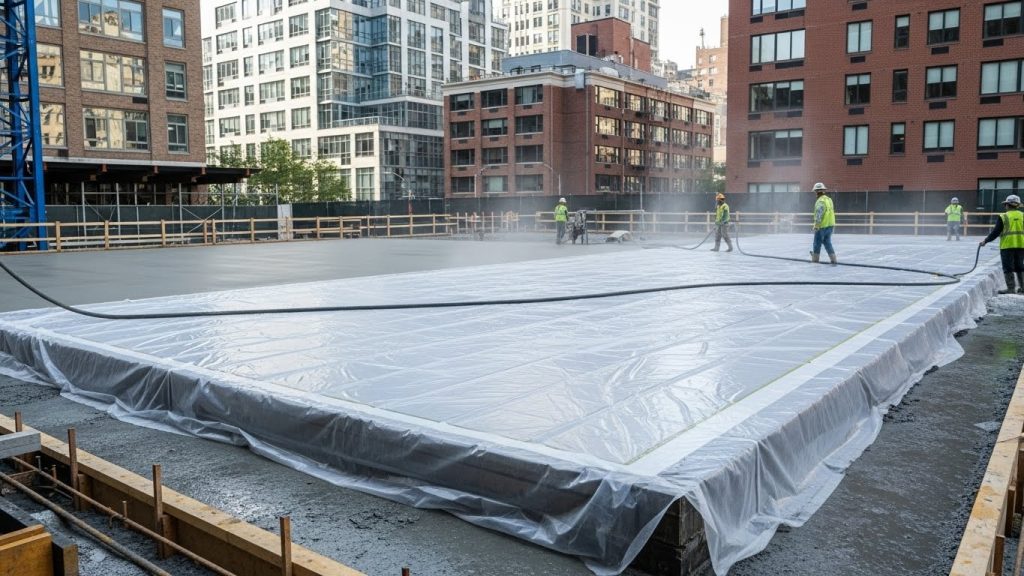
Maximized Concrete Strength: Proper concrete curing ensures maximum compressive strength, making slabs stronger and load-resistant.
Long-Lasting Durability: Correctly cured concrete resists cracking, moisture damage, weather exposure, and surface wear.
Smooth & Professional Finish: Effective curing keeps concrete surfaces smooth, dust-free, and visually appealing for residential and commercial projects.
Reduced Repair Costs: Proper curing prevents premature concrete failure, helping homeowners and businesses avoid costly concrete repairs or replacements.
FAQs – Most Asked Questions
What is the typical concrete curing time for most slabs?
Most slabs reach 80% strength in 7 days and full strength in 28 days, depending on thickness and conditions.
Can concrete cure too quickly?
Yes. Rapid drying due to heat or wind can reduce strength and cause surface cracking. Keeping the slab moist is essential.
How long before I can walk on 4-inch concrete?
Light foot traffic is usually safe after 24–48 hours. Heavy loads should wait at least 7 days.
Should I cover the concrete if rain is expected?
Yes. Use plastic sheets or tarps to protect freshly poured concrete for the first 24–48 hours.
Do I need a professional concrete contractor for curing guidance?
For large residential or commercial projects, hiring a residential or commercial concrete contractor ensures proper curing, correct slab thickness, and long-term durability.
Conclusion
Concrete curing is critical for strength, durability, and longevity. By understanding concrete curing time for different slab thicknesses and environmental conditions, you can plan your project safely and efficiently.
Whether you are pouring a small patio, a driveway, or a commercial slab, consulting a concrete contractor in New York or a residential/commercial concrete contractor is the best way to ensure quality results.
Contact Hi Tech Construction NY today for professional concrete pouring, curing guidance, and expert project management to guarantee long-lasting, strong concrete.