
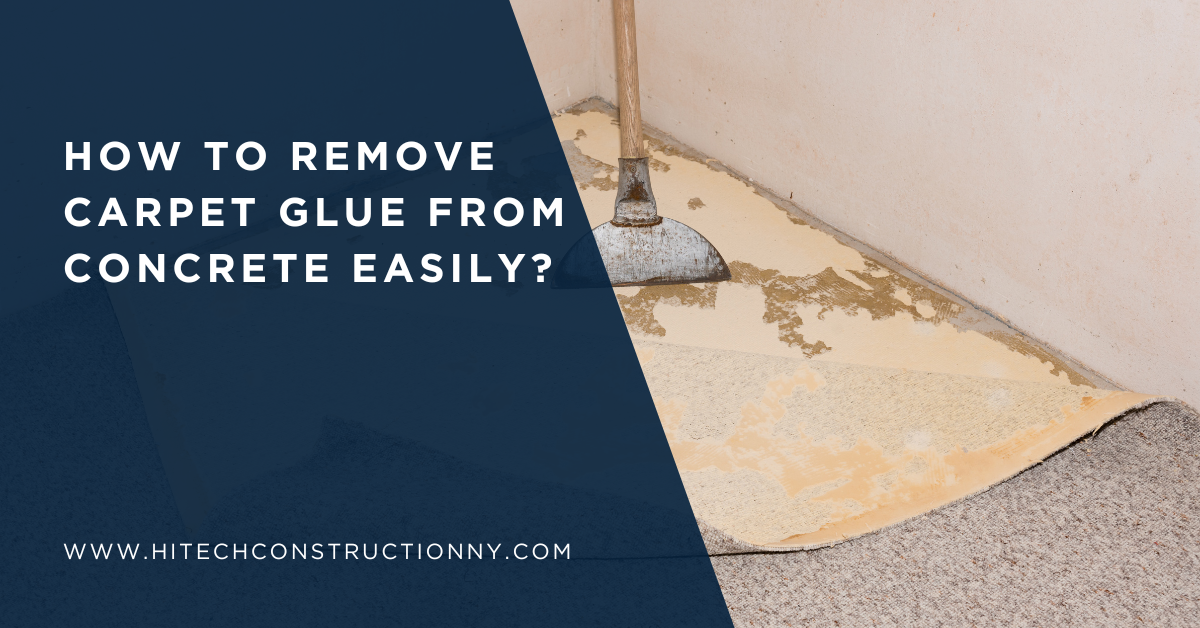
Have you ever pulled up old carpeting only to discover a stubborn layer of adhesive that seems impossible to remove? You’re not alone. Thousands of homeowners face this frustrating challenge when renovating their spaces, staring down at concrete floors covered in sticky, unsightly carpet glue that refuses to budge.
Removing carpet glue from concrete is more than just an aesthetic concern. It’s a critical step that directly impacts the success of your next flooring project. Whether you’re planning to install tile, hardwood, laminate, or even polish the concrete itself, any remaining adhesive will prevent proper bonding and create an uneven surface. Left untreated, these residues can cause your new flooring to fail prematurely, warp, or develop hollow spots that crack under pressure.
The good news? With the right approach, tools, and a bit of patience, you can completely remove carpet adhesive from your concrete floors without hiring expensive professionals. This comprehensive guide walks you through multiple proven methods, from heat and scraping techniques to chemical removers and mechanical grinding. You’ll learn how to identify the type of adhesive you’re dealing with, choose the best removal method for your situation, avoid common mistakes that can damage your concrete, and prepare the surface properly for your new flooring installation.
By the end of this guide, you’ll have all the knowledge needed to tackle this project confidently and restore your concrete floors to a clean, smooth surface ready for whatever comes next.
Understanding Carpet Adhesive Types
Before you start scraping away at your concrete floor, it’s important to identify what type of adhesive you’re dealing with. Different carpet glues require different removal approaches, and using the wrong method can make your job significantly harder or even damage your concrete surface.
Water-Based Adhesives
Water-based adhesives are the most common type used in residential carpet installations, especially in newer homes. These adhesives have a lighter color, often appearing tan or beige, and they’re relatively easier to remove compared to other types. They become brittle over time and may already be flaking in some areas. The good news is that water-based adhesives respond well to heat, moisture, and mild solvents, making them the most DIY-friendly option for removal.
Solvent-Based Adhesives
Solvent-based adhesives are tougher and more resilient than their water-based counterparts. They typically have a darker appearance, ranging from amber to dark brown, and maintain a slightly tacky or gummy texture even after years of being covered. These adhesives were commonly used in commercial applications and older residential installations. They require stronger chemical removers or mechanical methods to break down effectively, and they’re more resistant to simple scraping techniques.
Tar-Based Adhesives
Tar-based adhesives, also known as cutback adhesives, are the most challenging to remove. These black, thick adhesives were commonly used from the 1920s through the 1980s and can contain asbestos fibers, making them potentially hazardous. If you suspect your adhesive is tar-based (it will look very dark, almost black, and have a distinct petroleum smell), it’s crucial to have it tested for asbestos before attempting removal. Never sand or grind tar-based adhesives without professional assessment.
How to Identify Your Adhesive Type
Start by examining the color and texture of the residue. Scrape a small area with a putty knife. If it comes up relatively easily in dry flakes, you likely have water-based adhesive. If it’s gummy and stretchy, it’s probably solvent-based. If it’s black and rock-hard, proceed with caution as it may be tar-based. You can also try applying a small amount of hot water to a test spot. Water-based adhesives will soften, while solvent-based types will remain largely unaffected.
Also Read: Do Corner Properties in NYC Need Two Sidewalk Repair Permits?
Tools and Materials You’ll Need
Before starting carpet glue removal, gather the right safety gear and tools to make the job easier and safer. Protective gloves, safety goggles, and a respirator or dust mask are essential, especially when dealing with chemical removers or dust from scraping. Good ventilation is also important to protect your health while working indoors.
For removal, basic manual tools like a floor scraper, putty knife, and stiff bristle brush handle most glue residue. Tougher adhesives may require power tools such as an electric floor scraper or concrete grinder. You may also need a carpet glue remover, clean water, buckets, rags, and a mop to clean residue and prepare the concrete for new flooring.
Method 1: Heat and Scraping Technique
The heat and scraping method is one of the simplest and most cost effective ways to remove carpet glue from concrete, especially when dealing with water based or lightly bonded adhesives. Heat softens the glue, making it easier to lift from the surface without excessive force or harsh chemicals. This method is ideal for small to medium sized areas and for homeowners who prefer a more controlled, hands on approach.
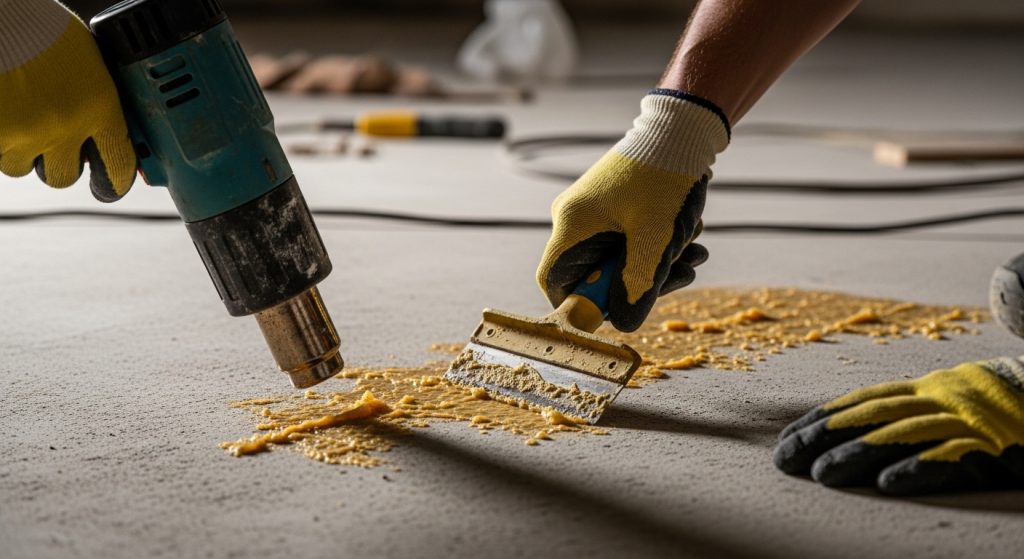
Start by applying heat to a small section of the glue using a heat gun or by pouring hot water over the area. Allow the heat to penetrate for a few minutes until the adhesive becomes soft and pliable. Using a floor scraper or putty knife, push the blade under the softened glue and scrape it away using steady pressure. Work in sections to prevent the glue from cooling and hardening again. Be careful not to dig the blade into the concrete, as this can leave scratches or gouges.
This technique works best on adhesives that respond to moisture or heat and may not be effective on solvent based or tar adhesives. Expect the process to be somewhat time consuming, especially for larger rooms, but it requires minimal equipment and has a low learning curve. With patience and proper scraping technique, heat and scraping can leave the concrete surface clean and ready for further preparation.
Method 2: Chemical Adhesive Removers
Chemical adhesive removers are an effective solution when carpet glue is too strong or too widespread for heat and scraping alone. These products are designed to break down the adhesive bond, allowing the glue to be lifted from the concrete with less physical effort. They are especially useful for solvent based adhesives or older glue that has hardened over time.
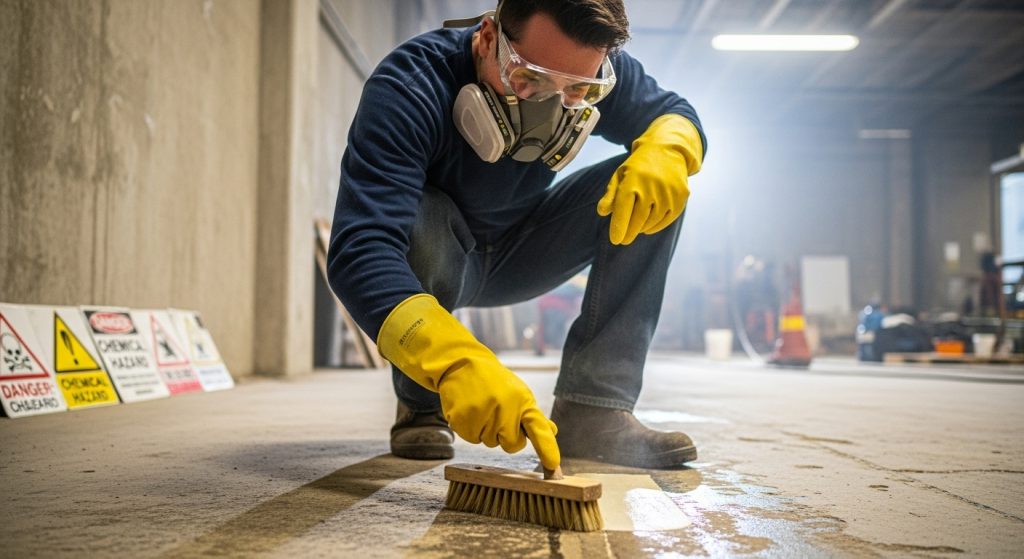
Begin by selecting a remover that is specifically labeled safe for use on concrete surfaces. Apply the product evenly over the glue using a brush, roller, or sprayer, following the manufacturer’s instructions. Allow the remover to sit for the recommended dwell time so it can penetrate and soften the adhesive. Once the glue becomes loose or gel like, scrape it off with a floor scraper or putty knife and collect the residue for proper disposal.
Safety is critical when using chemical removers. Always wear gloves, eye protection, and a respirator, and ensure the area is well ventilated. Some products may emit strong fumes or require additional cleanup steps to neutralize residue. While chemical removers are highly effective, they should be used carefully and tested on a small area first to avoid damaging the concrete or leaving behind unwanted residue.
Method 3: Mechanical Grinding
Mechanical grinding is the most aggressive and effective method for removing carpet glue that is deeply bonded to concrete or spread across large areas. This approach is best suited for thick, stubborn adhesives that do not respond to heat or chemical removers. It is commonly used in commercial spaces or during major renovations where speed and consistency are important.
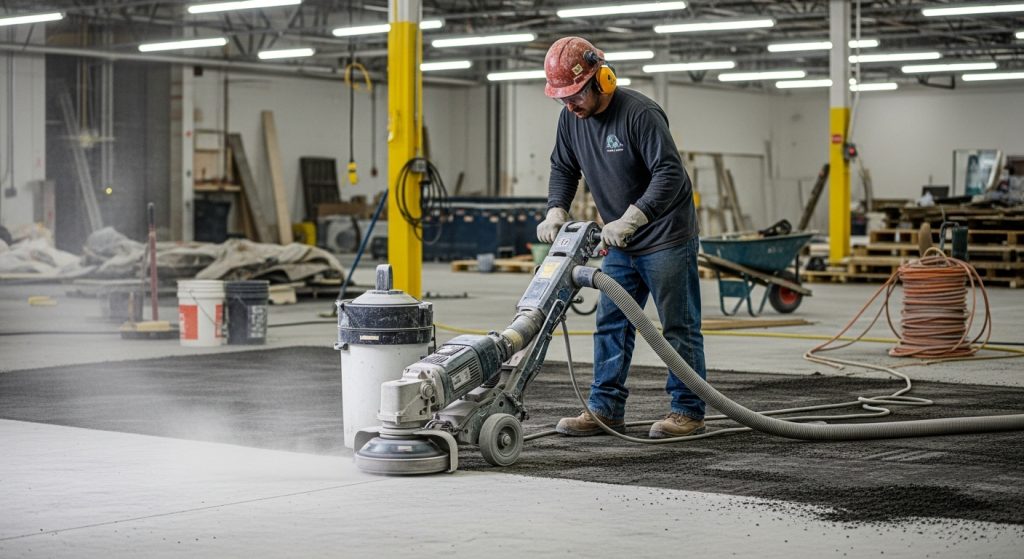
The process involves using a concrete grinder or floor grinding machine fitted with an appropriate abrasive wheel. Before starting, seal off the area and set up proper dust control using a vacuum attachment or dust shroud. Begin grinding in slow, even passes, allowing the machine to remove the glue layer gradually without cutting too deeply into the concrete. Check your progress frequently to avoid unnecessary surface damage.
While mechanical grinding delivers fast results, it requires experience and proper safety precautions. Dust, noise, and equipment handling can be challenging for beginners. For severely damaged concrete surfaces or projects that require a perfectly smooth finish, professional assessment may be the better option. In such cases, consulting concrete repair companies near me can help ensure the concrete is restored correctly and ready for new flooring.
Natural and Eco-Friendly Removal Solutions
Natural and eco friendly methods are a good option for homeowners who want to avoid harsh chemicals and strong fumes. These solutions work best on light to moderate carpet glue residue and in areas with good ventilation. While they may take more time and effort, they are safer for indoor air quality and the environment.
A common approach is using a mixture of vinegar and warm water to soften the adhesive. Apply the solution to the glue, let it sit for several minutes, and then scrape gently with a putty knife. Citrus based solvents are another effective option, as the natural oils help break down adhesive while leaving a more pleasant odor. For small spots, a thick baking soda paste mixed with water can help loosen residue when scrubbed with a stiff brush.
Eco friendly methods may not be strong enough for heavy or tar based adhesives, and repeated applications are often necessary. However, for minor glue buildup or finishing touches after scraping, these natural solutions can be a practical and low risk alternative to chemical removers.
Also Read: How Much Does It Cost To Repair a Sidewalk in NYC?
Step-by-Step Removal Process
Removing carpet glue from concrete is most successful when you follow a clear, structured process. The key is to prepare the area, choose the right method for your adhesive type, and clean the surface thoroughly afterward. This helps prevent damage, ensures even results, and makes the concrete ready for your next flooring project.
Preparation
Begin by clearing the room of furniture, debris, and loose carpet fibers. Open windows and doors to improve ventilation, and set up fans if possible. If you are using chemical removers or grinding, place plastic sheeting or tape along doorways to contain dust and fumes. Test your chosen method on a small, inconspicuous area first to confirm it works without damaging the concrete.
Application
Once the area is ready, apply the selected removal method in small sections. If using heat, warm the glue until it becomes pliable and scrape it away with a floor scraper. For chemical removers, apply the product evenly and allow the recommended dwell time before scraping. If grinding, move the machine slowly and evenly to avoid gouging the surface. Work methodically across the floor, repeating the process as needed until the glue is removed.
Cleanup
After removing the adhesive, collect all residue and dispose of it properly. Use clean water, a mop, and a stiff brush to scrub any remaining film or residue. If you used chemicals, rinse the area thoroughly and allow it to dry completely. Finally, inspect the surface for any remaining spots or imperfections, and make any necessary touch ups before proceeding with new flooring installation.
Common Mistakes to Avoid
Removing carpet glue from concrete can be a challenging task, especially if you are trying to save time or using the wrong tools. One of the most common mistakes is applying too much force while scraping, which can gouge or scratch the concrete surface. It is important to use steady pressure and keep the blade flat to avoid damaging the floor.
Another frequent issue is skipping safety precautions, especially when working with chemical removers or grinding equipment. Without proper ventilation, respirators, and eye protection, you may expose yourself to harmful fumes and dust. Many people also make the mistake of not testing the removal method on a small area first, which can lead to unexpected damage or ineffective results.
Rushing the process is another major error. Adhesive removal often requires multiple passes and patience, especially with older or thicker glue. Trying to speed up the work can result in uneven patches, remaining residue, or a rough surface that is difficult to repair. Taking your time and following a structured process will deliver cleaner results and reduce the risk of problems when installing new flooring.
When to Call a Professional
In many cases, removing carpet glue from concrete is a manageable DIY project, but there are situations where professional help is the safest and most efficient option. If the glue is deeply bonded, covers a large area, or has been in place for decades, the removal process can become physically demanding and time consuming. Professionals have the right equipment and experience to handle these challenges quickly and effectively.
Another reason to call a professional is if you suspect the adhesive contains asbestos, which is common in buildings built before the 1980s. Asbestos-containing adhesives require specialized testing and removal methods to protect your health. If the concrete shows signs of damage such as deep gouges, cracks, or uneven surfaces after glue removal, a professional can assess and repair the floor correctly.
For significant concrete work or repairs in urban areas, specialized contractors such as sidewalk repair nyc professionals or sidewalk contractors near me can provide comprehensive services and ensure the surface is properly restored.
Conclusion
Removing carpet glue from concrete can seem like a difficult task, but with the right approach and preparation, it is a manageable DIY project. By identifying the type of adhesive, choosing the most suitable removal method, and working in small sections, you can restore your concrete surface and prepare it for new flooring. Whether you use heat and scraping, chemical removers, mechanical grinding, or eco friendly solutions, the key is to work patiently and safely to avoid damaging the concrete.
Once the glue is removed, take time to clean the floor, repair any imperfections, and test moisture levels before installing new flooring. Proper preparation ensures better adhesion, a smoother finish, and long lasting results. If you encounter stubborn adhesive, large areas, or potential asbestos containing materials, consider consulting professionals to protect your home and ensure the job is done correctly. With the right tools, methods, and safety measures, you can complete the job successfully and move forward with your flooring renovation.
Frequently Asked Questions
How long does it take to remove carpet glue from concrete?
The time needed depends on the size of the area and the type of adhesive. Light glue removal in a small room may take a few hours, while heavy, old adhesive across large spaces can take a full day or more. Mechanical grinding or professional removal can speed up the process significantly.
Will removing carpet glue damage my concrete floor?
If done correctly, glue removal should not damage the concrete. Using improper tools, applying excessive force, or grinding too deeply can cause scratches, gouges, or uneven surfaces. Always test methods on a small area and use the appropriate tools to protect the concrete.
What is the easiest way to remove old carpet glue?
The easiest method depends on the adhesive type. For light, water based glue, heat and scraping or a natural solvent may work well. For stronger or older glue, chemical removers or mechanical grinding are usually more effective. Combining methods often yields the best results.
Can I install new flooring over carpet glue?
It is not recommended to install new flooring over carpet glue. Remaining adhesive can prevent proper bonding, cause uneven surfaces, and lead to peeling or shifting over time. Fully removing the glue ensures a smooth and stable base for new flooring.
Is carpet glue removal toxic?
Some carpet adhesive removers and solvents can release harmful fumes and irritants, making the process toxic without proper safety precautions. Always wear gloves, goggles, and a respirator, and work in a well ventilated area. Natural methods like vinegar or citrus based solutions are less toxic but may be less effective on heavy adhesives.
How much does professional glue removal cost?
Professional carpet glue removal costs vary based on the size of the area, adhesive type, and required equipment. Small residential jobs may cost a few hundred dollars, while larger commercial projects can run into thousands. Getting a quote from local concrete contractors or flooring professionals will provide the most accurate estimate for your specific situation.