
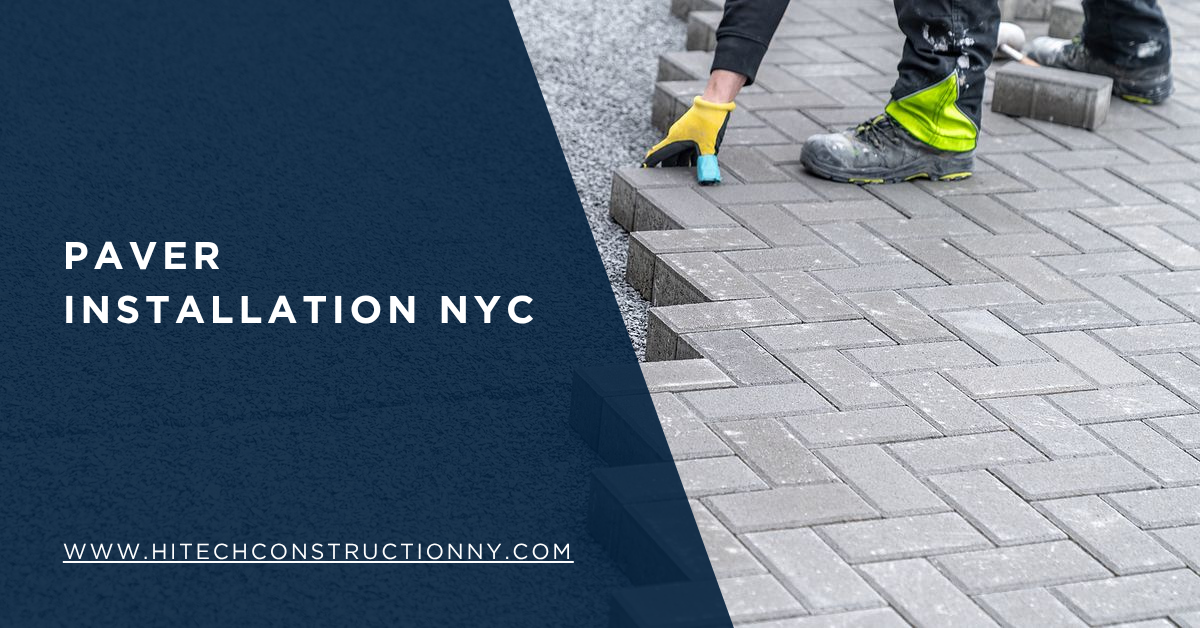
Pavers have become one of the most popular upgrades for New York City properties – durable, weather-resistant, and easier to repair than a single poured slab. Whether you’re planning a backyard patio, a front walkway, or a full paver driveway, this guide covers everything you need to know before starting a project: cost, materials, the installation process, permits, and how to keep pavers looking good for years.
Think of this as your starting point. Each section below links to a deeper, dedicated guide if you want to go further into that specific topic.
What Are Pavers, and Why NYC Property Owners Choose Them
Pavers are individual units – made from concrete, clay brick, or natural stone – installed over a compacted base rather than poured as one continuous slab. Because each unit is independent, pavers handle NYC’s freeze-thaw winters better than solid concrete: the joints allow slight movement without cracking the whole surface.
Common uses across NYC properties include:
- Backyard and rooftop-adjacent patios
- Front walkways and entryways
- Driveways and driveway aprons
- Pool decks
- Retaining wall borders and steps
Paver Installation Cost in NYC
Cost is usually the first question property owners ask. In general, installed paver projects in NYC range from $14 to $40 per square foot, depending on material and site conditions. A mid-size 300 sq ft patio typically runs $5,400 to $10,500 installed.
| Project Type | Typical Cost Range (Installed) |
|---|---|
| Paver walkway (small) | $1,500 – $4,000 |
| Paver patio (200–400 sq ft) | $3,600 – $14,000 |
| Paver driveway | $10,000 – $28,000+ |
For a full size-by-size and material-by-material breakdown, see our detailed guide: Paver Walkway Ideas for NYC Curb Appeal: Design Guide
Choosing the Right Paver Material
Not all pavers perform the same way in New York’s climate. The main categories:
| Material | Best For | Approx. Lifespan |
|---|---|---|
| Concrete pavers | Budget-friendly patios and walkways | 25–30 years |
| Clay brick pavers | Classic look, historic-style properties | 30+ years |
| Natural stone (bluestone, travertine) | Premium patios, high-end curb appeal | 40+ years |
| Permeable pavers | Yards with drainage issues | 25–30 years |
Going deeper: Paver Materials That Survive NYC Winters: Expert Guide breaks down how each material handles NYC winters specifically.
The Paver Installation Process, Step by Step
A proper installation follows a set sequence – skipping steps is the most common reason pavers shift or sink within a few years:
- Site marking and excavation – removing existing surface material and digging to the correct depth (typically 6–9 inches for patios, more for driveways)
- Base preparation – compacted gravel base for drainage and stability
- Bedding layer – a thin layer of sand or stone dust for a level laying surface
- Paver placement – units are laid in the chosen pattern, cut as needed around edges
- Edge restraints – plastic or metal edging installed to lock the pattern in place
- Joint sand and compaction – polymeric sand swept into joints and compacted to lock everything together
For driveways specifically, see: Paver Driveway Installation: Process, Timeline & Permits.
Do You Need a Permit for Paver Installation in NYC?
Most backyard paver patios do not require a DOT or DOB permit. However, permits may be required if your project involves:
- Work within the public sidewalk or curb area
- A driveway apron connecting to the street
- Structural retaining walls above a certain height
- Grading changes that affect drainage onto neighboring property
A licensed contractor can confirm what applies to your specific property before work begins.
Common Paver Installation Mistakes to Avoid
Improperly installed pavers tend to show problems within the first year or two — sunken sections, weeds growing through joints, or edges shifting outward. The most frequent causes are insufficient base depth, skipping edge restraints, and poor drainage planning.
Full breakdown: Common Paver Installation Mistakes (and How to Avoid Them).
Maintaining Your Pavers After Installation
Pavers are low-maintenance compared to concrete, but a few habits extend their life significantly:
- Resealing every 2–3 years to protect against staining
- Topping up joint sand as it settles over time
- Addressing weeds early before roots widen the joints
- Rinsing salt residue after winter deicing
Full guide: How to Maintain Pavers: Sealing, Cleaning & Weed Prevention.
Pavers vs. Concrete: Which Should You Choose?
| Factor | Pavers | Poured Concrete |
|---|---|---|
| Upfront cost | Higher | Lower |
| Freeze-thaw durability | Better | More prone to cracking |
| Repair method | Replace individual units | Patch or full replacement |
| Style options | Wide variety of patterns/colors | Limited without stamping |
Full comparison: Paver Patio vs Concrete Patio: Which Is Right for Your NYC Home?
How Long Do Pavers Last in New York?
With proper installation and basic maintenance, most paver surfaces in NYC last 25 to 40+ years, depending on material. Concrete pavers sit at the lower end of that range, while natural stone can outlast the building it’s attached to.
Full guide: How Long Do Pavers Last in New York?
When Pavers Need Repair
Even well-installed pavers eventually need spot repairs — usually from tree root movement, ground settling, or heavy vehicle traffic on driveway pavers. The advantage over concrete is that individual units can be lifted and reset without redoing the entire surface.
Full guide: Paver Repair: Fixing Sunken, Shifted, or Cracked Pavers.
Frequently Asked Questions
How long does paver installation take?
A standard patio (200–400 sq ft) typically takes 3–5 days. Driveways take longer due to the deeper base required for vehicle weight.
Are pavers more expensive than concrete long-term?
Pavers cost more upfront but often cost less over 20+ years since individual units can be repaired instead of replacing an entire slab.
Can pavers be installed in winter?
Installation is possible in milder winter conditions, but ground that’s frozen or waterlogged isn’t suitable for proper base compaction. Most NYC contractors recommend spring through fall for best results.
Do pavers need a permit in NYC?
Most residential backyard installations don’t, but driveway aprons, sidewalk-adjacent work, or retaining walls above certain heights may require DOB or DOT approval.
Planning a paver project? Get a free on-site estimate from Hi Tech Construction NY — we’ve installed pavers across NYC and Long Island for over 24 years.