
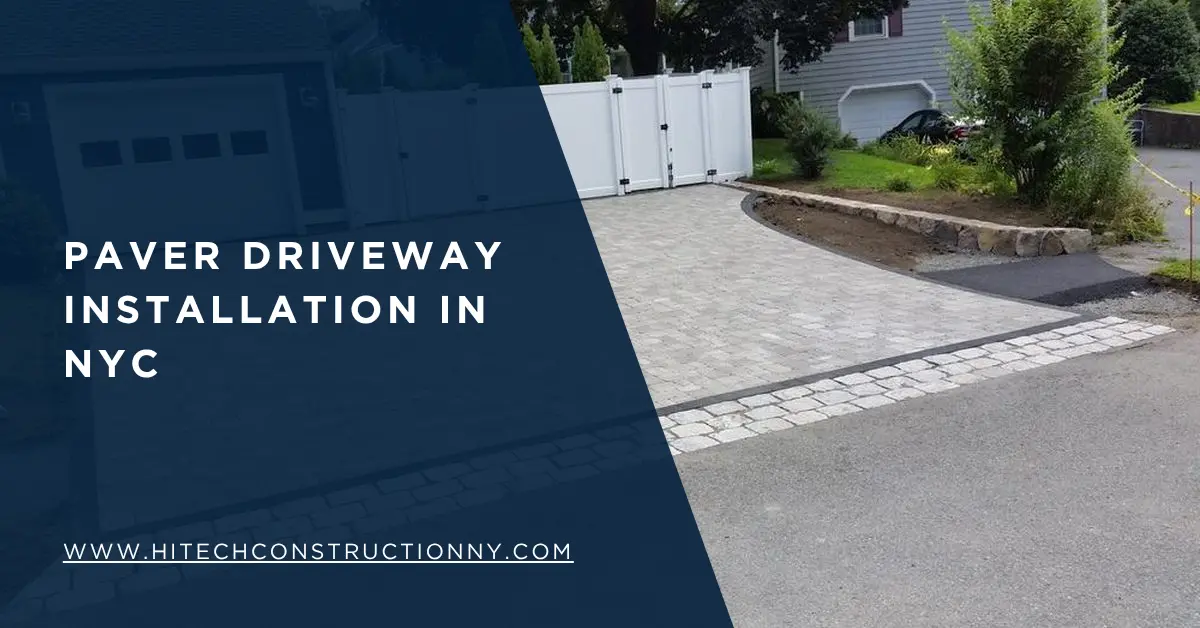
At HiTechConstructionNY, paver driveways are one of the projects we handle most often across Brooklyn, Queens, and the Bronx, alongside our sidewalk and concrete work.
Quick answer: Paver driveway installation in NYC involves 8 stages – excavation, base compaction, bedding, paver placement, edge restraints, and joint sanding – and typically takes 3–5 days for a single-car driveway or 5–8 days for a two-car driveway. A DOT permit is only required if the project involves a new or modified curb cut or work within the sidewalk zone; resurfacing within the existing footprint usually doesn’t need one.
A paver driveway isn’t just laid on top of the ground – it’s built in layers, starting several inches below the surface. Because driveways carry vehicle weight (unlike a patio or walkway), the base preparation is more demanding, and skipping a step is the main reason paver driveways settle or shift within a few years. Here’s exactly how the process works, how long each stage takes, and what permits may apply in NYC.
The Paver Driveway Installation Process
| Stage | What Happens |
|---|---|
| 1. Site assessment & marking | Contractor measures the area, checks slope/drainage, and marks excavation boundaries. |
| 2. Excavation | Existing surface (asphalt, concrete, or soil) is removed to the required depth – typically deeper than a patio due to vehicle load. |
| 3. Base compaction | Layers of crushed stone are added and compacted in stages to create a stable, load-bearing base. |
| 4. Bedding layer | A thin, level layer of sand or stone dust is placed as the surface pavers sit on. |
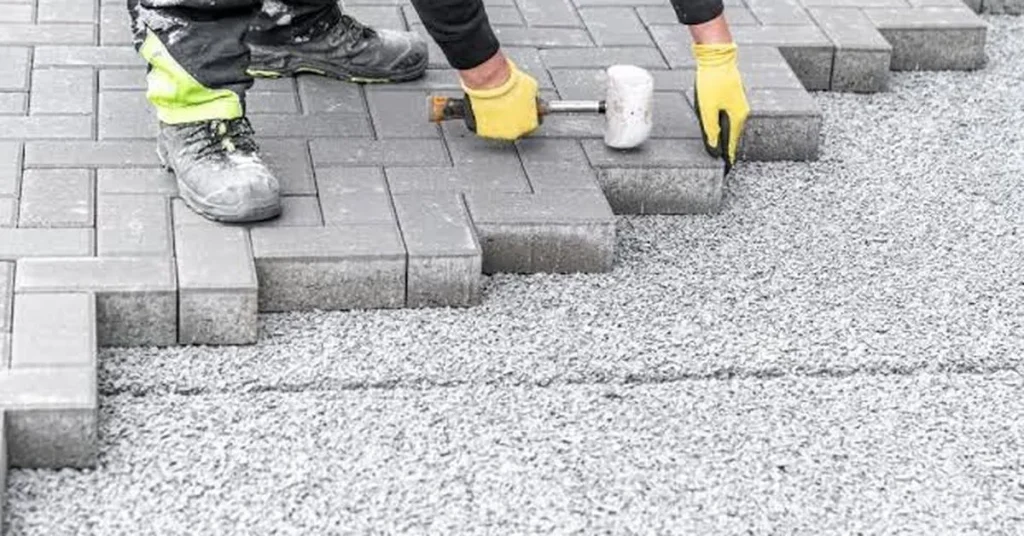
| 5. Paver installation | Pavers are laid in the chosen pattern, cut to fit around edges, drains, or curb transitions. |
| 6. Edge restraints | Restraints are installed along all open edges to prevent pavers from spreading under vehicle weight over time. |
| 7. Joint sand & compaction | Polymeric sand is swept into the joints and mechanically compacted to lock the surface together. |
| 8. Final inspection & cleanup | Surface is checked for level, joints are sealed if requested, and the site is cleaned. |
How Long Does It Take?
| Driveway Size | Typical Installation Time |
|---|---|
| Single-car driveway | 3–5 days |
| Two-car driveway | 5–8 days |
| Larger or complex layouts (curves, multiple patterns, drainage work) | 8–12+ days |
Timelines can extend if the existing surface requires significant demolition, if drainage issues need correcting first, or during periods of heavy rain – base compaction can’t be done properly on saturated ground.
Do You Need a Permit for a Paver Driveway in NYC?
This is where driveways differ from patios – because a driveway connects to the street, it’s more likely to involve city permitting. Permits are commonly required when the project includes:
- A new or modified curb cut (the opening in the curb where the driveway meets the street) – this requires DOT approval
- Work within the sidewalk zone between the property line and the curb
- Grading changes that could affect stormwater runoff onto a neighboring property or the street
- Structural elements like retaining walls bordering the driveway above a certain height
If you’re simply replacing an existing driveway surface within its current footprint and not touching the curb cut, a permit is often not required – but this varies by property and should be confirmed before work begins. A licensed contractor typically handles the permit application and DOT coordination as part of the project.
What Affects the Installation Timeline
- Existing surface removal – asphalt and concrete take longer to break up and haul away than a gravel or dirt base
- Drainage correction – if water currently pools near the garage or foundation, additional grading work adds time upfront but prevents problems later
- Access to the site – narrow driveways or tight street parking in dense NYC blocks can slow material delivery and equipment staging
- Curb cut work – if the curb needs to be modified, DOT inspection scheduling can add time beyond the physical installation
- Weather – freezing temperatures or heavy rain can pause excavation and compaction stages
Why the Base Matters More on Driveways Than Patios
A patio only needs to support foot traffic, but a driveway needs to support the repeated weight of vehicles without shifting. This is why paver driveways typically require a deeper compacted base – often several inches more than a comparable patio – along with stronger edge restraints along every open side. Cutting corners here is the most common cause of early paver driveway failure, showing up as ruts, sinking sections, or pavers spreading outward at the edges. This is also why choosing an experienced paver installation team matters just as much as the material itself.
Frequently Asked Questions
Can I install a paver driveway myself, or does it need a licensed contractor?
Technically it can be a DIY project, but the base compaction work requires proper equipment (plate compactors, sometimes a vibratory roller) and correct depth calculations for vehicle load. Most NYC homeowners hire a licensed contractor, especially when curb cut permits are involved.
Will my new paver driveway need a DOT permit?
Only if the project involves a new or modified curb cut, or work within the sidewalk/curb zone. A straightforward resurfacing within the existing footprint usually doesn’t require one, but this should be confirmed for your specific property.
How soon can I drive on a new paver driveway?
Light foot traffic is fine almost immediately, but it’s best to avoid parking vehicles on it for at least 24-48 hours to allow the joint sand and base to fully settle.
Can pavers be installed over an existing asphalt or concrete driveway?
In some cases, yes, if the existing surface is structurally sound and properly graded. A site inspection is needed to confirm this is a safe option rather than removing the old surface entirely.
Planning a paver driveway project? Contact Hi Tech Construction NY for a free on-site assessment, including permit guidance specific to your property.