
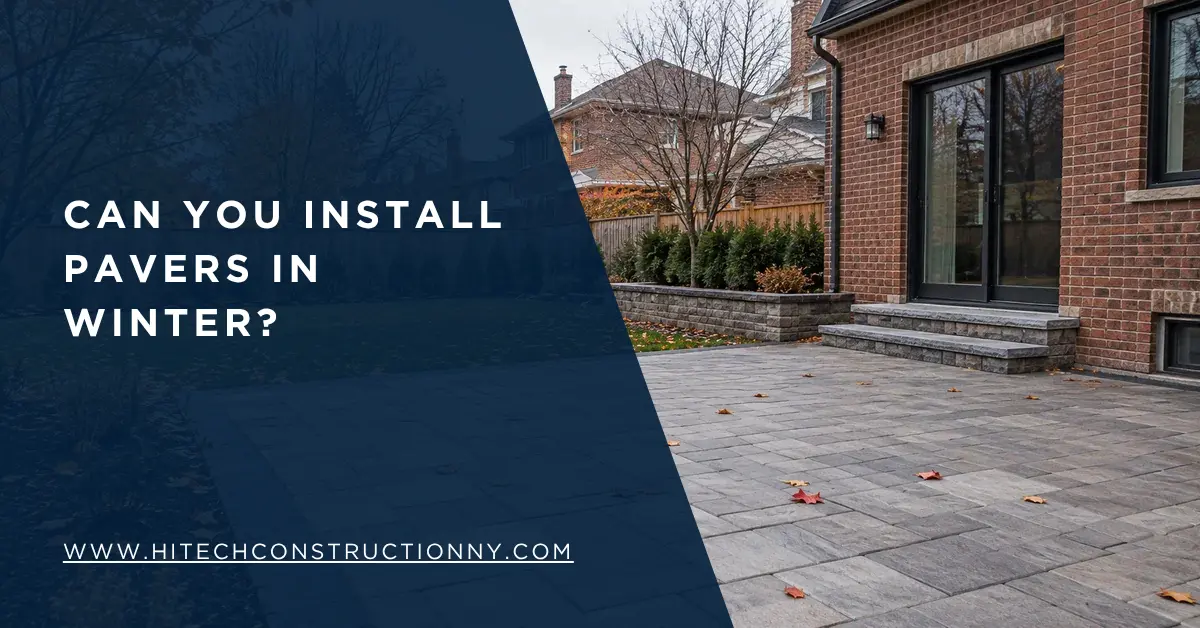
Quick answer: Can you install pavers in winter? Sometimes, but only while the ground isn’t frozen. Industry specs say not to build on frozen subgrade or bedding sand, or with frozen materials. Most polymeric joint sands also need temperatures above 32°F to set. In Brooklyn and Queens, that makes fall the smart window. By the middle of winter, many projects are better scheduled for spring.
Pavers handle New York winters well once they’re installed. The risk is putting them in while it’s cold. A base laid on frozen soil can look perfect in January and start sinking in April when the ground thaws.
Here’s what actually changes as the temperature drops, what can and can’t be done each season, and how to plan your patio, walkway or driveway around it.
Why Cold Weather Matters for Paver Installation
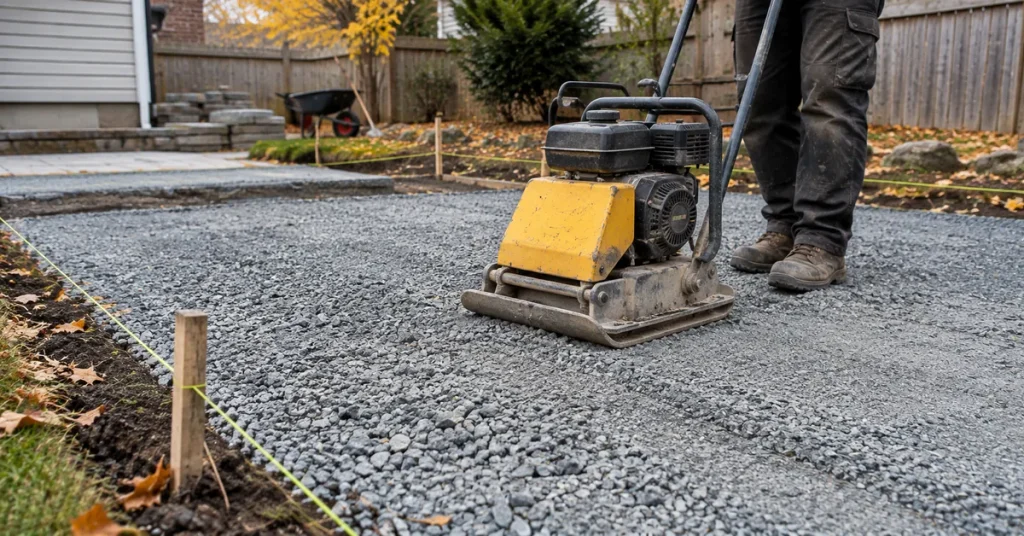
A paver surface is only as good as what’s underneath it. Cold weather affects four parts of the job.
1. Frozen soil can’t be compacted properly
Pavers sit on layers of compacted soil and crushed stone. Industry guide specs call for compacting the soil subgrade to at least 95% Standard Proctor density. Frozen soil is hard, but it isn’t compacted. When it thaws, it softens and settles, and the pavers above it sink.
That’s why paver specifications say plainly: do not use frozen materials or build on frozen subgrade or setting beds.
2. Base stone and bedding sand can freeze too
A stockpile of crushed stone or bedding sand left out on a cold night can freeze into clumps. Frozen clumps don’t spread or level evenly. Once they thaw, they leave low spots under the pavers.
3. Polymeric sand needs the right temperature to set
Most modern joints are filled with polymeric sand. It hardens after it’s activated with water and then dries. One major manufacturer, Alliance Gator, says its polymeric sands are made to be installed above 32°F, and below that the sand may never set properly. It also has to dry fully before it hardens, which is slow in cold, damp weather.
Every brand sets its own limits, so a good contractor follows the label on the product they’re using.
4. Concrete edge restraints need curing time
Many installs use a poured concrete edge to hold the pavers in place. Like any concrete, it cures slowly in the cold and needs protection from freezing. Learn more in Can You Pour Concrete in Winter in New York?
For more on what goes wrong when these steps are rushed, read Common Paver Installation Mistakes.
Can You Install Pavers in Winter? A Season-by-Season Guide for NYC
The calendar matters less than the ground. Here’s how it usually plays out in Brooklyn and Queens, where the average first frost arrives around November 17 at JFK and November 20 in Central Park.
| Period | Ground Conditions | Full Installs | Polymeric Sand | Our Take |
|---|---|---|---|---|
| September – early November | Soil unfrozen, mostly dry | Yes | Yes, on dry days | Best window of the year for patios, walkways and driveways |
| Mid-November – December | Mostly unfrozen, with cold snaps | Often, with planning | Only on days above the product’s minimum | Book early. Plan around the forecast. |
| January – February | Often frozen or wet | Rarely the right choice | Often too cold to set | Plan and book now, build in spring |
| March – April | Thawing, can be muddy | Yes, once soil dries | Yes, on dry days | Good, but busy season starts |
A mild stretch in January can make a small job possible. But a contractor should check that the soil is truly unfrozen, keep materials from freezing, and be ready to wait out a cold snap before sanding the joints. If those can’t be done, waiting is cheaper than redoing a sunken patio.
Why Fall Is the Smart Time to Install Pavers in Brooklyn & Queens
- The ground is still workable. Soil is unfrozen and usually drier than in spring, so the base compacts properly.
- It’s ready when you need it. A patio or walkway put in this fall is ready for spring and summer, with no wait once the weather warms up.
- It gets a winter to settle. A properly built base handles freeze-thaw well. After the first winter, any spot that needs a touch-up shows itself early, and pavers are easy to lift and reset.
- Driveways stay usable. Pavers can usually take traffic soon after they’re installed and compacted, unlike new concrete that has to cure first. Joint sand still needs its own dry time, so follow your contractor’s advice.
If you’re deciding between materials, our guide to the best paver materials for NYC winters compares concrete, clay brick and natural stone.
Missed the fall window? Do this instead
- Get the estimate and design done now. Measurements, layout, material choice and any permits don’t depend on the weather.
- Reserve a spring start date. Ask for one of the first slots once the ground thaws and dries.
- Order materials early if a specific paver color or style is important to you.
- Protect what you already have. If you have existing pavers, see our paver maintenance guide for winter care tips.
6 Questions to Ask Before a Late-Fall or Winter Paver Install
If a contractor offers to install pavers in cold weather, these questions separate a careful plan from a risky one:
- How will you check that the soil isn’t frozen before excavating and compacting?
- How deep is the base, and how will you compact it? Driveways need a deeper, stronger base than walkways.
- How will you keep the base stone and bedding sand from freezing overnight?
- Which joint sand will you use, and what’s its minimum temperature? What happens if it gets too cold before the sand sets?
- If there’s a concrete edge restraint, how will you protect it while it cures?
- What’s your warranty if pavers settle after the first thaw?
A contractor who answers these clearly, or who tells you honestly to wait until spring, is one worth hiring. For the full step-by-step build, see our paver driveway installation process.
Book Your Paver Project Before the Ground Freezes
Hi Tech Construction NY has installed paver patios, walkways and driveways across Brooklyn and Queens since 2001. We’ll tell you honestly whether your project can go in this season or should wait for spring, and we never build on frozen ground.
We’re fully licensed and insured, and estimates are free. If the timing doesn’t work this year, we’ll lock in your design and an early spring start date.
Call (718) 600-4676 or request a free estimate. See our paver installation services, or our work as a concrete contractor in Brooklyn and Queens.
Frequently Asked Questions
Can you install pavers in winter in New York?
Only when the ground isn’t frozen. Paver specs say not to build on frozen subgrade or setting beds, or with frozen materials. In Brooklyn and Queens, that usually means fall and early winter are workable, and deep winter often isn’t.
What is the best time of year to install pavers in NYC?
September through early November is ideal. The soil is unfrozen and fairly dry, and temperatures suit polymeric sand. Spring works too, once the ground has thawed and dried out.
What temperature is too cold for polymeric sand?
It depends on the brand. Alliance Gator says its polymeric sands are made to be installed above 32°F. The sand also needs to dry before it hardens, so cold, damp days slow it down. Always follow the product label.
What happens if pavers are installed on frozen ground?
Frozen soil feels solid but isn’t properly compacted. When it thaws in spring, it softens and settles. The result is usually sunken, uneven or loose pavers.
Can I walk or drive on new pavers in cold weather?
Usually soon after installation. Joint sand needs to dry first. Alliance Gator says its polymeric sand can take foot and vehicle traffic after 24 hours as long as it’s dry. Your contractor should tell you the exact timing.
Do pavers hold up to NYC winters once installed?
Yes. A properly built paver surface handles freeze-thaw well, and individual pavers can be lifted and reset if needed. See How Long Do Pavers Last in NYC?