
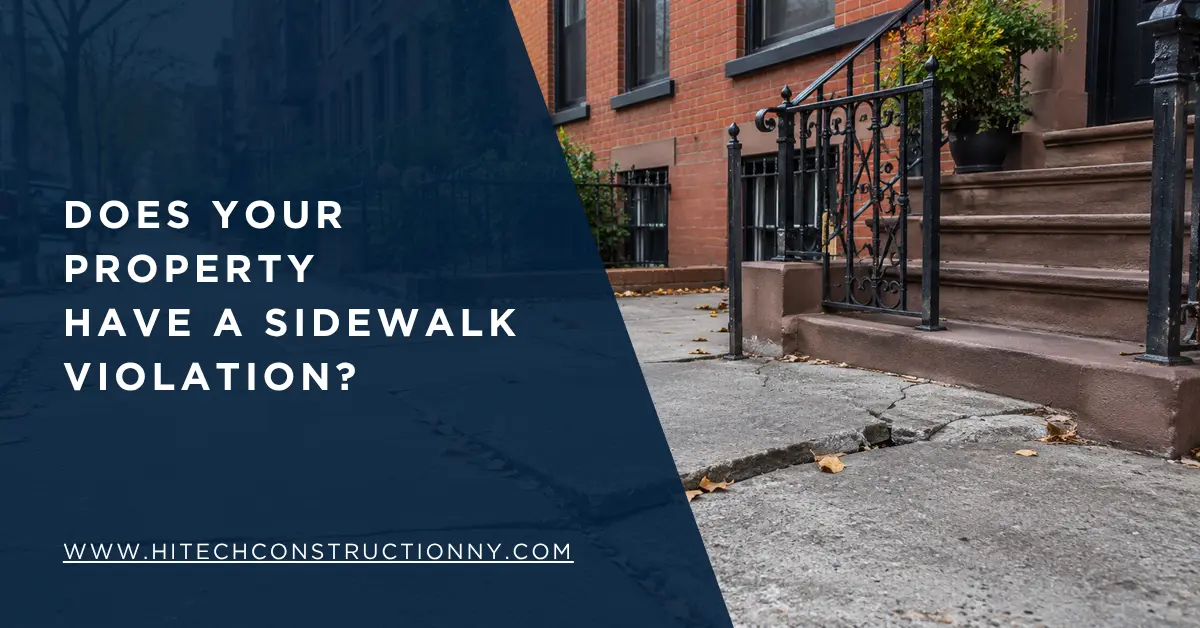
Quick answer: For a fast NYC sidewalk violation lookup, search your house number and street in NYC DOT’s public “Sidewalk Management Database – Violations” on NYC Open Data. To confirm the official status or get a copy of the notice, submit a “Violation Inquiry or Copy” request through NYC311 with your violation number. If you’re buying or selling, your title search should also show any violation filed with the County Clerk.
Many owners in Brooklyn and Queens find out about a sidewalk violation at the worst time: during a sale, a refinance, or when a notice from years ago finally surfaces. A violation carries no fine, but NYC DOT says it “may complicate selling or refinancing a property.”
The good news is that you can check in a few minutes. This guide walks through every official way to look up a sidewalk violation, what the results mean, and what to do if you find one.
First, What Counts as a Sidewalk Violation?
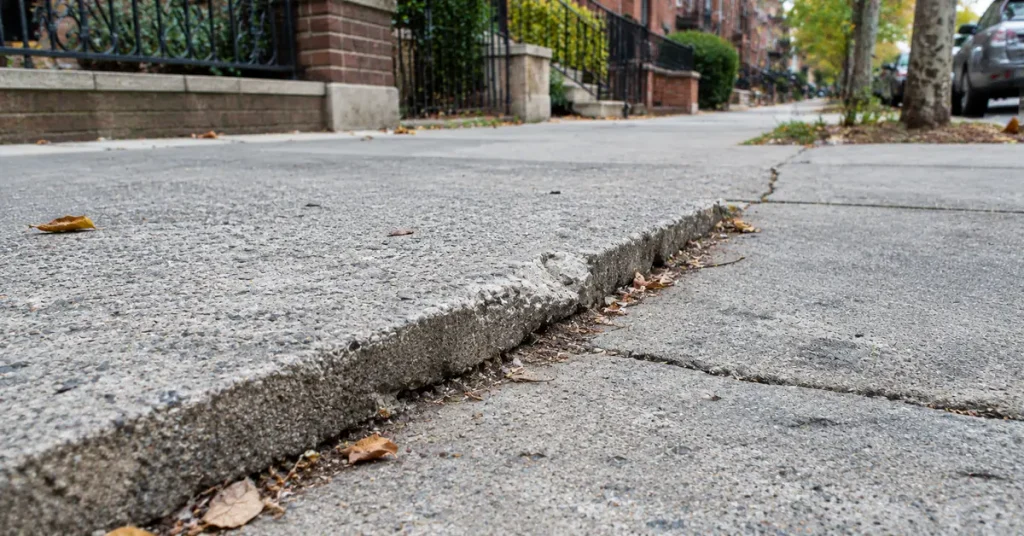
A Notice of Sidewalk Violation is an official notice from NYC DOT telling a property owner that the sidewalk in front of their property is defective. Common defects include trip hazards, broken or collapsed flags, and patchwork. NYC DOT also files a copy of the notice with the County Clerk.
Three facts every owner should know:
- No fine. There is no fine for the violation itself.
- 75 days to repair. The owner has 75 days from receiving the notice to make the repair.
- The newest notice counts. If you received more than one, the newest violation supersedes all earlier ones.
For the full background, read What Is a Sidewalk Violation in NYC?
NYC Sidewalk Violation Lookup: 4 Ways to Check Your Address

| Method | What You Need | What You Get | Best For |
|---|---|---|---|
| 1. NYC Open Data Search | House number + street | Violation number, issue date, defect type, dismissal date | A fast first check |
| 2. NYC311 Violation Inquiry or Copy | Violation number | Official status and a copy of the notice | Confirming before you act |
| 3. NYC311 Sidewalk Violation Search | Your property details | Whether a violation was issued to your property correctly | Notices you think are wrong |
| 4. Title Search | Property address | Violations filed with the County Clerk | Buyers and sellers |
Method 1: Search NYC DOT’s public violation database
NYC DOT publishes its sidewalk violation records on NYC Open Data as the Sidewalk Management Database – Violations. It’s free and needs no account.
- Open the dataset and choose the option to view or query the data. The button labels on NYC Open Data change from time to time.
- Filter House number (house_num) by your house number.
- Filter Street (onstname) by one keyword from your street name. Street names are stored in capital letters with extra spaces, such as “WEST 136 STREET”, so search for “136” or “BEDFORD” rather than the full name.
- Check the cross streets (frstname and tostname) to make sure the result is on your block.
How to read your result:
| Column | What it tells you |
|---|---|
| Violation number (swv_number) | Write it down. You’ll need it for 311. |
| Issue date (vissuedate) | When the violation was issued |
| Dismissal date (vdismissdate) | When it was closed. If it’s empty, treat the violation as possibly still open. |
| Defect marks (trip_haz, broken, patchwork) | What the inspector flagged |
One caution: this is a public dataset and can lag behind DOT’s internal records. Use it to find violations, then confirm the status with 311 before you make a decision.
Don’t want to dig through city data? Send us your address and we’ll check it for you, free. Call (718) 600-4676 or send us a message.
Method 2: Request the status or a copy through NYC311
NYC DOT directs owners to NYC311 to request the status or a copy of a sidewalk violation. The 311 page lists this as a “Violation Inquiry or Copy” request. It covers existing violations and liens on file.
You’ll need your sidewalk violation number. It’s 4 to 6 digits long, such as 1432 or 31221. You can find it on the original notice, or as the swv_number in Method 1.
Method 3: Think the violation isn’t yours? Ask for a Sidewalk Violation Search
NYC DOT’s property owner guide says that if you received a violation for a property that isn’t yours, you should call 311 and ask for a “Sidewalk Violation Search”. This checks whether the violation was issued correctly. If you disagree with the violation itself, the guide points to a “New Sidewalk Violation – Re-Inspection Request” within 75 days of receiving the notice.
Method 4: Check the title search
NYC DOT files a copy of each Notice of Sidewalk Violation with the County Clerk. That’s why violations can show up when a title company runs a search during a sale or refinance. If you’re buying, ask your title company or attorney to flag any sidewalk violations early, before closing.
Bonus check: was a repair already started? NYC DOT’s permit search shows permits issued for an address. If you find a sidewalk construction permit, a previous owner or contractor may have already started the repair process.
Found a Violation? Here’s What It Means and What to Do
| What You Found | What It Usually Means | Your Next Step |
|---|---|---|
| No record at your address | No violation in the public data | Keep the sidewalk in good shape. A trip hazard can still lead to a future violation. |
| Violation with a dismissal date | It was repaired and closed | Keep a copy of the dismissal for your records. |
| Violation with no dismissal date | It may still be open | Confirm with 311 using the violation number, then plan the repair. |
| Open violation and a City repair bill or lien | DOT may have done the work itself | Read our guide to sidewalk violation costs . |
If the violation is still open, act on it rather than waiting. If the owner doesn’t repair, NYC DOT says it may send its own contractor to do the work. The Department of Finance then bills the owner. After 90 days, interest accrues and a lien is placed on the property.
Fixing it yourself, through a licensed contractor, is usually faster and gives you control over the price and schedule. The process is:
- Hire a licensed, insured sidewalk contractor.
- Get a DOT sidewalk construction permit (the violation number goes on the application).
- Complete the repair to DOT standards.
- Request a dismissal inspection through 311.
We cover each step in detail in How to Remove a Sidewalk Violation in NYC.
Tips for Buyers, Sellers and Brooklyn & Queens Owners
Selling soon? Run the lookup before you list, not after you’re in contract. A repair, the permit and the dismissal inspection all take time. Finding the violation early keeps it from delaying your closing.
Buying? Run the lookup on any address you’re serious about. An open violation passes to the new owner if nobody catches it before closing. Ask your attorney whether the seller should fix it first or credit you for the repair.
Refinancing? Lenders rely on a clean title, so check early.
Street tree damage on a 1–3 family home? This one matters a lot in tree-lined parts of Queens and Brooklyn. NYC DOT says the City no longer issues sidewalk violations to one-, two- and three-family properties for damage caused solely by City trees. If you received one for tree damage, ask 311 about it. See also Tree Roots Damaging Your Sidewalk.
Old notice in a drawer? An old violation doesn’t go away on its own. If there’s no dismissal on record, it still needs a repair and a dismissal inspection.
Local guides: Sidewalk Violation Removal in Brooklyn ·Queens Sidewalk Violations
Need a Sidewalk Violation Cleared? We Can Help
Hi Tech Construction NY has repaired sidewalks and cleared violations for property owners in Brooklyn and Queens since 2001. We handle the full job: the site visit, the DOT permit, a repair built to DOT standards, and the dismissal inspection request.
We’re fully licensed and insured, and we give free on-site estimates. If you’re up against a closing date or the 75-day deadline, tell us when you call.
Call (718) 600-4676 or request a free estimate. Learn more about our sidewalk violation removal service, or our work as a concrete contractor in Brooklyn and Queens.
Frequently Asked Questions
How do I do an NYC sidewalk violation lookup by address?
Search your house number and street in NYC DOT’s “Sidewalk Management Database – Violations” on NYC Open Data. It shows the violation number, issue date and any dismissal date. Then confirm the status through NYC311.
Where do I find my sidewalk violation number?
It’s printed on the Notice of Sidewalk Violation. It also appears as the swv_number in the NYC Open Data violations database. Violation numbers are 4 to 6 digits long.
Is there a fine for a sidewalk violation in NYC?
No. NYC DOT says there is no fine for the violation itself. If you don’t repair it, though, DOT may do the work and bill you. After 90 days, interest accrues and a lien is placed on the property.
How long do I have to fix a sidewalk violation?
75 days from when you receive the Notice of Sidewalk Violation.
Will a sidewalk violation show up when I sell my house?
It can. NYC DOT files a copy of the violation with the County Clerk, so it can appear in a title search. DOT says a violation may complicate selling or refinancing.
Can I get a copy of my sidewalk violation?
Yes. Submit a “Violation Inquiry or Copy” request through NYC311 and include your violation number.