
Quick answer: The easiest way to winterize concrete driveway slabs is a simple fall routine: inspect for cracks and low spots, clean the surface, fill small cracks, repair sinking or badly broken sections, apply a penetrating sealer while it’s still warm enough, fix drainage, and plan safe de-icing. In Brooklyn and Queens, get this done by early November. The average first frost hits JFK around November 17 and Central Park around November 20.
A crack you can barely see in October can turn into a broken slab by March. Winter doesn’t usually start the damage. It takes small problems and makes them bigger, one freeze at a time.
At Hi Tech Construction NY, we’ve repaired driveways across Brooklyn and Queens since 2001. Most winter damage we see could have been stopped with a few hours of prep in the fall. Here’s the checklist we give our own customers.
Why NYC Winters Are So Hard on Concrete Driveways
The problem is the freeze-thaw cycle. Water gets into cracks, joints and the surface pores of your concrete. When it freezes, it expands by about 9%. That pushes the crack a little wider. When it thaws, more water flows into the bigger gap, and the cycle repeats.
New York winters swing above and below freezing again and again, so a driveway can go through this many times in one season. Add road salt tracked in from the street and snow-shovel scrapes, and small surface problems grow fast.
The damage usually shows up as:
- Hairline cracks that become wide, deep cracks
- Flaking or peeling on the surface (called scaling or spalling)
- Slabs that sink or tilt as water washes out the soil underneath
- Edges that crumble where the driveway meets the street or sidewalk
When should you winterize your driveway?
The best window is mid-October to early November. Most crack fillers and sealers need dry weather and air temperatures above a minimum, often around 50°F, to cure properly. Always check the product label.
In our area, the average first frost comes around November 17 at JFK Airport in Queens and November 20 in Central Park, based on 1991–2020 data (NYBG). Some years it arrives weeks earlier, so don’t wait for the forecast.
Winterize Concrete Driveway Checklist: 8 Steps for Fall
1. Walk the driveway and look for problems
Pick a dry afternoon and walk the full length of your driveway. Take photos so you can compare them in the spring. Look for:
- Cracks wider than about 1/4 inch, or cracks with one side higher than the other
- Sunken or tilted sections
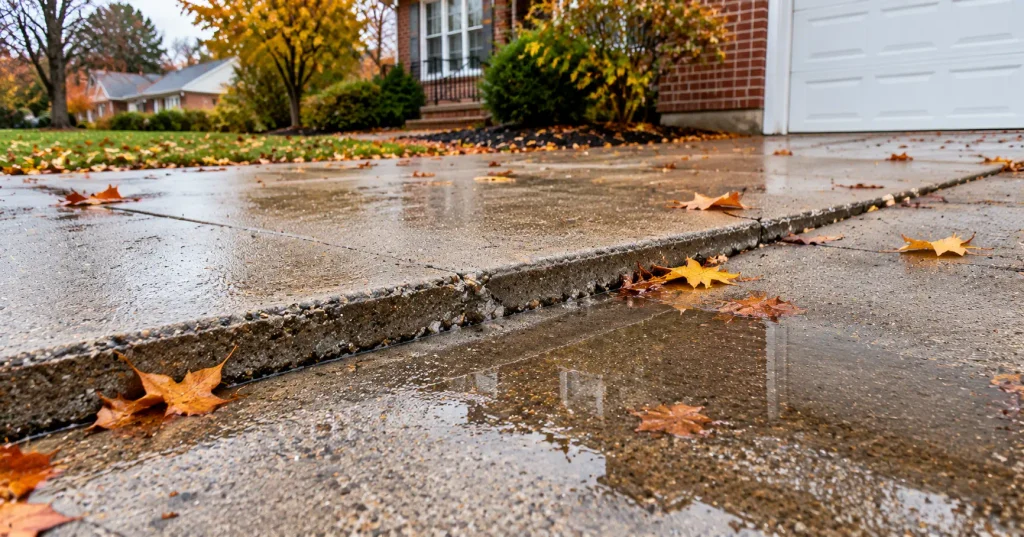
- Spots where water sits after rain
- Flaking, pitting or crumbling on the surface
- Broken edges, especially at the apron where the driveway meets the street
2. Clean the surface
Sweep off leaves and dirt, then hose the driveway down. Wet leaves trap moisture against the concrete and leave stains. Treat oil spots now, because sealer won’t bond well over them. See our guide on removing oil stains from concrete.
3. Fill small cracks before water gets in
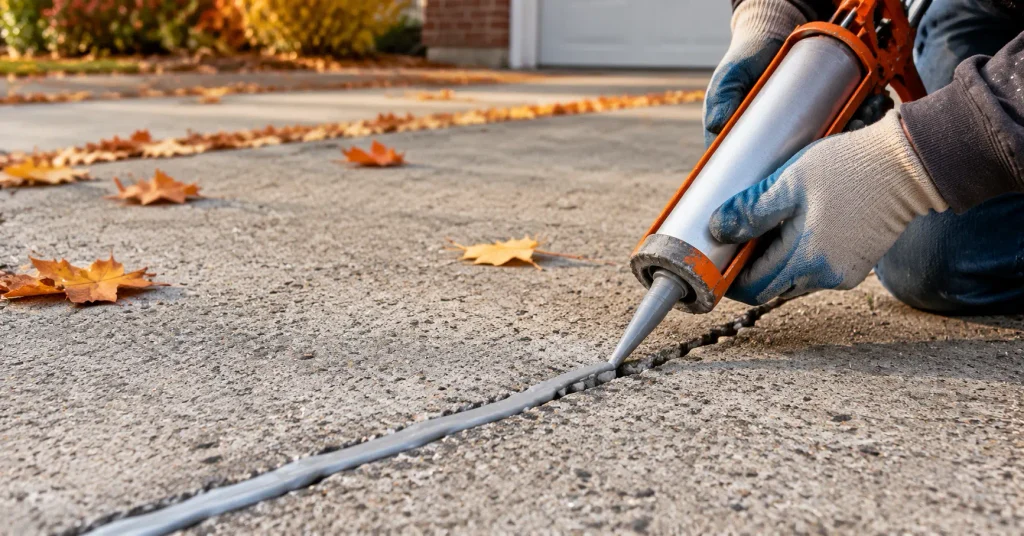
Hairline and small cracks can usually be filled with a concrete crack filler or flexible sealant. Clean out the crack first and let it dry. Filling them now keeps water out before the first freeze. For a step-by-step walkthrough, read how to fix a cracked concrete driveway.
4. Get bigger damage repaired by a pro
Wide cracks, uneven slabs and sunken sections are not DIY fixes. They often mean the base under the concrete has washed out or settled. Filler on top won’t fix that, and winter will make it worse.
Fall is the last good window for this kind of work. Once temperatures stay low, pouring new concrete takes extra steps like heated blankets and cold-weather mixes. Learn more in can you pour concrete in winter in New York?
5. Seal the concrete
A good penetrating sealer (silane or siloxane based) soaks into the concrete and repels water and salt. It does this without making the surface slippery. Most driveways need resealing every 2–3 years.
Apply sealer only on a clean, dry surface and within the temperature range on the label. If the season is already too cold, wait until spring rather than sealing in bad conditions.
6. Fix drainage problems
Standing water is the biggest risk in winter, because it freezes into ice sheets and soaks into cracks. Check that:
- Downspouts empty away from the driveway, not onto it. Add an extension if needed.
- Gutters are clear of leaves so they don’t overflow onto the concrete.
- The driveway slopes away from your house and garage.
If water still pools in the same spot, the slab may need regrading or a drain. That’s a repair worth scheduling before winter.
7. Plan safe de-icing
The de-icer you choose matters:
- Never use de-icers that contain ammonium nitrate or ammonium sulfate. They attack concrete chemically.
- Use rock salt sparingly. Avoid it entirely on concrete less than a year old.
- Shovel first and use only as much ice melt as you need.
- Sand gives traction without hurting the concrete.
8. Get snow-ready
- Use a plastic shovel or a shovel with a rubber edge. Metal blades chip and scrape the surface.
- If a plow service clears your driveway, put reflective stakes along the edges so the blade doesn’t hit them.
- Pile snow where it will melt away from the driveway, not onto it. Don’t push it into the street, which NYC rules don’t allow.
DIY or Call a Professional?
Most of this checklist is easy for a homeowner to do. Structural problems are not.
| What You See | DIY Is Fine | Call a Pro |
|---|---|---|
| Hairline cracks | Yes, fill with crack filler | Only if many cracks are spreading |
| Cracks wider than ~1/4 inch | No | Yes, may need patching or section replacement |
| One side of a crack higher than the other | No | Yes, usually a base or settling problem and a trip hazard |
| Sunken or tilted slab | No | Yes |
| Light surface flaking | Clean and seal | If flaking is deep or widespread |
| Water pooling in the same spot | Clear gutters, extend downspouts | If the slab itself is pitched wrong |
| Crumbling apron at the street | No | Yes, this section may involve sidewalk and curb work |
| Sealing | Yes, if you follow the label | If you want it done right the first time |
What Brooklyn & Queens Homeowners Should Watch For
A few things come up again and again on our jobs in these two boroughs:
- Older driveways. Many homes in Queens neighborhoods like Bayside, Flushing and Fresh Meadows, and in Brooklyn neighborhoods like Marine Park and Bay Ridge, have driveways that are decades old. Older concrete has more cracks and joints for water to get into, so fall prep matters even more.
- Shared and narrow driveways. Common in Brooklyn rowhouse blocks and parts of Queens. Water often drains between the houses, so check for pooling along both sides.
- The apron and the sidewalk. The part of your driveway that crosses the public sidewalk takes the most traffic and the most salt. As a property owner, you’re generally responsible for keeping the sidewalk in front of your property safe. Cracks or raised edges there can become a trip hazard or lead to a sidewalk violation.
- Mature street trees. Roots can lift driveway and sidewalk slabs. Read more about tree roots damaging your sidewalk.
What if it’s already too cold?
If temperatures have already dropped:
- Skip sealing until spring.
- Clear snow quickly and gently, and go easy on salt.
- Mark any cracks or sunken spots so they don’t become trip hazards under snow.
- Book a professional repair for the first good-weather window. Many contractors fill their spring schedule early.
Get Your Driveway Ready Before the First Freeze
If your walk-through turned up wide cracks, sinking slabs or drainage problems, fall is the time to fix them. Waiting until spring usually means a bigger and more expensive repair.
Hi Tech Construction NY has repaired driveways in Brooklyn and Queens since 2001. We’re fully licensed and insured, and we handle any DOT permits when work touches the sidewalk. We offer free on-site estimates.
Call (718) 600-4676 or request a free estimate. You can also learn more about our driveway repair services, or see our work as a concrete contractor in Brooklyn and Queens.
Frequently Asked Questions
When is the best time to winterize a concrete driveway in NYC?
The best time to winterize concrete driveway surfaces in NYC is mid-October to early November. Crack fillers and sealers need dry weather and temperatures above the minimum on their label, often around 50°F. The average first frost is around November 17 at JFK and November 20 in Central Park.
Should I seal my concrete driveway before winter?
Yes, if the concrete is clean and dry and the temperature is within the sealer’s range. A penetrating sealer helps keep water and salt out of the concrete. If it’s already too cold, wait until spring.
Can I fix driveway cracks in cold weather?
Small cracks can be filled on a mild, dry day with a product rated for cooler temperatures. Big repairs and new concrete are harder once it gets cold. They need cold-weather methods to cure properly, so schedule them in the fall when you can.
Does rock salt damage concrete driveways?
It can, especially on new concrete or concrete that isn’t sealed. Use salt sparingly, shovel first, and never use de-icers that contain ammonium nitrate or ammonium sulfate.
Do you repair driveways in both Brooklyn and Queens?
Yes. Hi Tech Construction NY repairs concrete driveways, sidewalks and pavers across Brooklyn and Queens. Request a free estimate.