
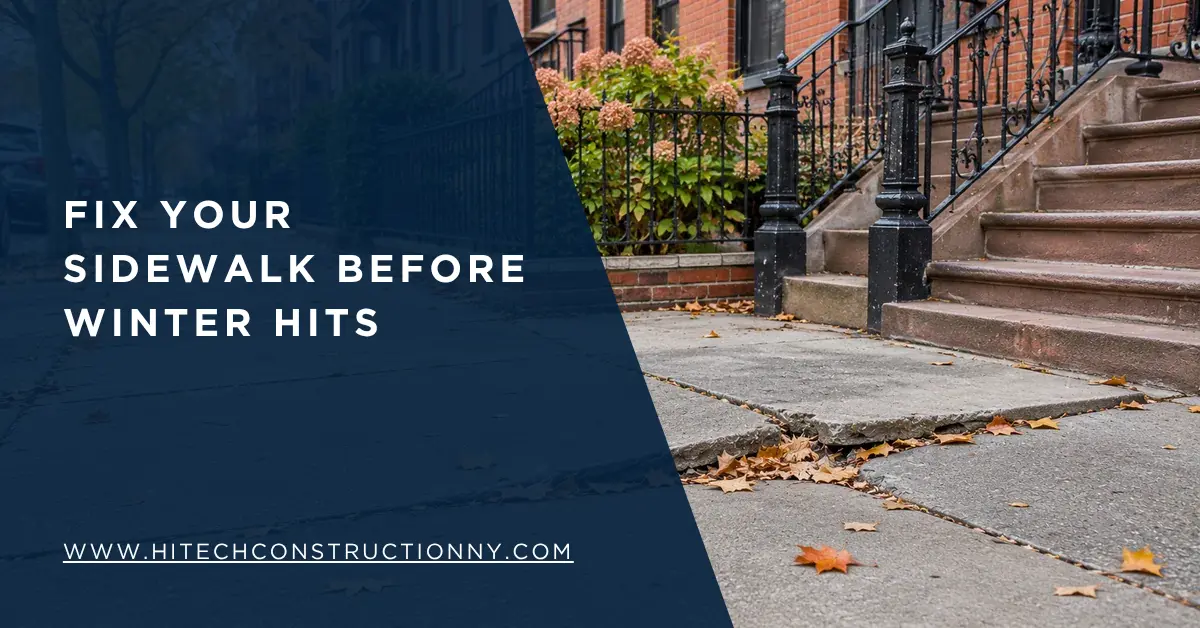
Quick answer: In most cases, yes. Sidewalk repair before winter stops freeze-thaw from turning small cracks into broken flags. It also removes trip hazards before snow hides them. If you’ve received a DOT violation, the 75-day clock keeps running in winter. In Brooklyn and Queens, aim to finish concrete work by early to mid-November, before the average first frost around November 17 at JFK.
A cracked or raised sidewalk flag is easy to step around on a dry October afternoon. Under an inch of snow or a sheet of ice, it’s a different story. Winter also makes the damage itself worse.
This guide helps you decide whether to fix your sidewalk now or wait for spring. It also covers the NYC rules that matter most once the cold arrives.
What Winter Does to a Damaged Sidewalk
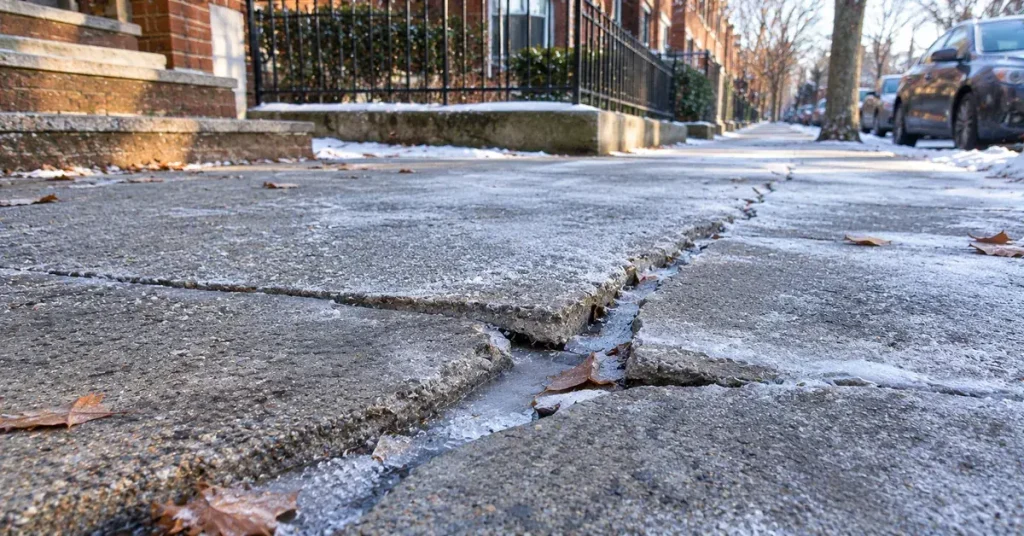
Freeze-thaw widens every crack. Water seeps into cracks and joints, freezes, and expands by about 9%. That pushes the concrete apart a little more each time. New York winters cross the freezing point again and again, so small cracks can turn into broken, loose flags by spring.
Snow hides trip hazards. A raised edge or a missing piece of concrete is easy to see in the fall. Under snow it disappears. Uneven flags also make shoveling harder and leave ridges of ice where water pools.
Salt speeds up surface damage. De-icing salt tracked along the sidewalk adds to the freeze-thaw cycle. It can make an already damaged concrete flake and pit.
Water undermines the base. Water that runs through a broken flag can wash out soil underneath. That leads to sinking and tilting, which is harder and more expensive to fix than a cracked surface.
Not sure how serious your damage is? See Signs Your Sidewalk Needs Immediate Repair.
Sidewalk Repair Before Winter or Wait for Spring?
Use this table to decide. If any row in the Repair now column matches your sidewalk, don’t wait.
| Your Situation | Repair Now (This Fall) | OK to Wait for Spring |
|---|---|---|
| Raised edge or uneven flags | Yes, it’s a trip hazard that snow will hide | — |
| Broken, loose or missing pieces | Yes, water and ice will make it worse | — |
| You received a DOT violation | Yes, the 75-day clock runs in winter too | — |
| You’re selling or refinancing soon | Yes, a violation may complicate the deal | — |
| Sinking or tilting flags | Yes, the base is likely washing out | — |
| Hairline cracks, surface still level | Seal or monitor them | Yes, plan a full repair for spring |
| Light cosmetic wear or stains | — | Yes |
| It’s already freezing for days at a time | Temporary safety fixes only | Yes, full concrete work in spring |
The last row matters. Concrete can be poured in cold weather, but it needs extra protection to cure properly. Learn more in Can You Pour Concrete in Winter in New York?
NYC Rules That Matter More Once Winter Arrives
Snow clearing deadlines
NYC property owners must clear snow and ice from their sidewalks. Under Department of Sanitation rules:
| When the Snow Stops | Clear the Sidewalk |
|---|---|
| 7 AM – 5 PM | Within 4 hours |
| 5 PM – 9 PM | Within 14 hours |
| 9 PM – 7 AM | By 11 AM |
You need to clear a path at least 4 feet wide. Corner owners also need to clear access to the crosswalk and pedestrian ramp. Missing the deadline can bring a fine. A level sidewalk is far easier to shovel cleanly than one with raised or broken flags.
Violations don’t pause for winter
NYC DOT’s property owner guide answers this directly. If you get a violation in winter and want to do the work privately, you still have to get it started within 75 days. DOT says a contractor should be scheduled to begin repairs as soon as the weather permits.
If the work isn’t started within 75 days, the City may do the repair and the Department of Finance will bill you. NYC DOT says that after 90 days, interest accrues and a lien is placed on the property. There’s no fine for the violation itself.
Liability for slips and trips
Under NYC Administrative Code Section 7-210, most property owners are responsible for keeping the sidewalk next to their property reasonably safe. They can be held liable for injuries caused by failing to do so. Owner-occupied one-, two- and three-family homes used only as residences are generally exempt from this liability rule. Either way, fixing hazards before snow season protects the people who use your sidewalk. This is general information, not legal advice.
One more Brooklyn & Queens note: NYC DOT no longer issues sidewalk violations to one-, two- and three-family properties for damage caused solely by City trees. See Who Is Responsible for Sidewalk Repair in NYC? for more.
Your Fall Sidewalk Repair Game Plan
- Walk your sidewalk this week. Look for raised edges, broken or loose pieces, sinking flags and spots where water pools. Take photos.
- Check for an open violation. Even an old notice can still be open. OurNYC sidewalk violation lookup guide shows you how.
- Get an estimate early. Contractors need time for the site visit, the DOT sidewalk permit and scheduling.
- Book the repair for a dry stretch before the deep cold. In Brooklyn and Queens, early to mid-November is a good target. The average first frost comes around November 17 at JFK and November 20 in Central Park.
- Too late this year? Make it safe and book spring. Mark or report hazards, keep the area well shoveled, and reserve an early spring start date.
Curious how long the job takes once it starts? See How Long Does Sidewalk Repair Take in NYC? Local guides: Sidewalk Repair in Brooklyn · Sidewalk Repair in Queens
Beat the Freeze: Get Your Sidewalk Fixed This Fall
Hi Tech Construction NY has repaired sidewalks for homeowners and property owners in Brooklyn and Queens since 2001. We handle the site visit, the DOT permit, a repair built to DOT standards, and the dismissal inspection request if you have a violation.
We’re fully licensed and insured, and estimates are free. If it’s too late for a full repair this season, we’ll tell you honestly and lock in an early spring date.
Call (718) 600-4676 or request a free estimate. Learn more about our sidewalk repair services, or our work as a concrete contractor in Brooklyn and Queens.
Frequently Asked Questions
Is sidewalk repair before winter worth it?
Yes, if your sidewalk has raised edges, broken pieces or sinking flags. Freeze-thaw makes that damage worse, and snow hides trip hazards. Hairline cracks on a level sidewalk can usually wait until spring.
What’s the latest I can repair my sidewalk in NYC this year?
It depends on the weather, not a fixed date. In Brooklyn and Queens, early to mid-November is a safe target, since the average first frost is around November 17 at JFK. Concrete can go in later with cold-weather protection, but it’s harder to do well.
I got a sidewalk violation in winter. Do I still have 75 days?
Yes. NYC DOT says the work still needs to start within 75 days, and a contractor should be scheduled to begin as soon as the weather permits.
Can concrete sidewalks be poured in winter?
Yes, but it takes extra steps to keep fresh concrete from freezing while it cures. See Can You Pour Concrete in Winter in New York?
How fast do I have to shovel my sidewalk in NYC?
If snow stops between 7 AM and 5 PM, within 4 hours. Between 5 PM and 9 PM, within 14 hours. Between 9 PM and 7 AM, by 11 AM.
Am I liable if someone slips on my broken sidewalk?
Most NYC property owners can be held liable under Section 7-210 of the Administrative Code. Owner-occupied one-, two- and three-family homes used only as residences are generally exempt. Talk to an attorney about your specific situation.